

By Mr. Benjamans / This Is Hip Hop HQ
There is something quietly audacious in Give It Time, the latest single from Visceral Design: a song that stretches across continents and perspectives, holding a mirror to love’s fractures—and its faint hopes of repair.
Released August 29, 2025, Give It Time was written and produced in both Paris and the United States. That bi-continental origin is more than logistical—it becomes symbolic. The emotional distance between two people, separated by place or memory, forms the scaffolding of this song’s tragedy and its yearning.
Story & Structure: Dual Voices, One Collapse
From its first verse, the song invites listeners into a fractured interior:
- Verse 1 is sung as “her” perspective, but it’s deceptive. The narration, emotional inflections, even imagery align with what “he” must also feel. This is not just her pain—it’s theirs. Guilt, longing, the weight of loss—it’s shared.
- Chorus shifts: now his voice hopes that their breakup is a dark impasse, a tunnel, not a final exit. With time, he believes, something could be made right.
- Verse 2 dramatizes the turning point. They both attempt to break free from the “trauma tourniquet” — that phrase is brutal, vivid. It suggests love can wound itself into the body, constricting, choking. In that verse, they try to turn a new page, deciding that the past can’t fully be reconciled.
- Ending circles. “On and on we go” echoes the cycles of relationships—break, hope, relapse, distance, hope again. The song doesn’t close neat; it closes open, with the fragile optimism that with time maybe new ground can be found.
That cyclical structure is deliberate: few relationships are clean, final. Few endings are absolute. In that ambiguity lies the song’s haunt.
The Man Behind the Sound: Tyler Kaufman & Visceral Design
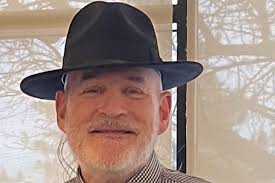
Tyler Kaufman, the artist behind Visceral Design, is no ordinary producer. His background reads like a hybrid of scientist, composer, technologist:
- He’s classically trained (Berklee, Magna Cum Laude).
- He blends cinematic, electronic, and world music textures, even bringing in the sitar.
- He collaborates with scientists (biologists, neuroscientists) to architect art inspired by lab work.
- He’s working with Dr. Richard Boulanger to embed his music into the metaverse (MetaQuest + Csound) so listeners can interact, manipulate, live inside the art.
That level of ambition gives Give It Time more than emotional weight: it’s also a statement of art & tech as equal collaborators. The emotional script is not neutral—it is encoded, designed, modular, open to reconfiguration.
Kaufman lives in London now, building his third studio, while his reach spans Paris, the U.S., and emergent virtual spaces. That cosmopolitan footprint is felt, though never heavy-handed, in this track.
Reading the Layers: Emotion, Production, Tension
Let’s sit under the hood.
Emotional Architecture
There’s a subtle “echo mirror” effect in the verses: you hear her lament, but it sounds like his. That’s by design. It builds empathy and disorientation: you don’t know whose memory is speaking, whose heartbreak you’re inhabiting. In doing so, the song resists binary blame. Love’s wreckage is shared.
The “trauma tourniquet” line stands out. It poetically names what listeners often feel but struggle to say: love as both bandage and wound, constrictive balm.
At the end, when it cycles again, there’s no resolution. But there is resolve. The hope is not naive—it’s tired, tested, fragile.
Production & Sound
Kaufman is a sound designer first. The track layers:
- Electronic atmospherics (pads, ambient textures),
- Synthetic and acoustic instrumentation,
- Vocal processing that occasionally shimmers (so the voice sometimes rides a thin line between human and ethereal),
- Subtle transitions: the verse feels intimate, then the chorus opens wide.
Nothing feels gratuitous. Everything is in service to mood and meaning.
One tension I hear (not as critique, as dialogue): where the production is too smooth, it risks softening the edges of raw emotion. The parts that feel most real are the spaces: moments of restraint before the chorus, breath before confession. In future mixes, pushing those margins—leaving cracks—might deepen the emotional scars.
Cultural & Emotional Resonance
In 2025, songs about heartbreak are common. What distinguishes Give It Time is its refusal to settle for catharsis. It roots heartbreak in temporality—time as healer, filter, judge. It asks not “did we fail?” but “can time reroute what was broken?”

Also, its transnational production announces something: heartbreak isn’t local. It doesn’t ask permission from geography or culture. Whether in Paris or across the Atlantic, love fractures the same.
More, Kaufman’s leveraging of tech (sound design, spatial audio, possibly metaverse interaction) signals a path: emotional songs don’t have to be just lyric + melody. They can be environments you step into. The gap between listener and music shrinks.
I hear Give It Time as a kind of future-ballad: not just to be consumed, but inhabited. In years, listeners might remix the song, pull apart the emotional threads, live inside the versions.
Reception & Reflection
The Groover feedback was enthusiastic, highlighting vulnerability, emotional depth, and hypnotic aura. The track gets praise for balancing “raw” sadness with calming production. The vocal delivery is singled out: “passionate yet effortless, emotional yet carefree.” That duality is exactly the tension the song leans on.
But even praise likes to be sharpened. For this song to live beyond initial listens:
- Will repeated listening reveal new cracks, not smooth over them?
- Can listeners find something in those cracks that feels like their own story?
- How will the live version land—will the emotional shades survive without studio layering?
- As Kaufman experiments with listener interaction in the Metaverse, how will people’s choices alter the emotional architecture? Could your version of the heartbreak differ from mine?
Final Thought: Time Is a Medium, Not Cure
Give It Time doesn’t promise healing. It offers time as medium, possibility, lens. It knows love and loss are shadows cast across years, not just days. It knows that endings might remain open.
Visceral Design has given us more than a breakup song. It’s a map of how we trace wounds across time, how we speak in dual voices, and how sometimes the only hope is that time remembers us kindly.
I’ll be following what this song becomes—what versions, what remixes, what lives in other languages, what formations it takes across the metaverse. Because this is a song that feels like it’s just beginning, not ending.